Why do we feel obligated to watch the news?
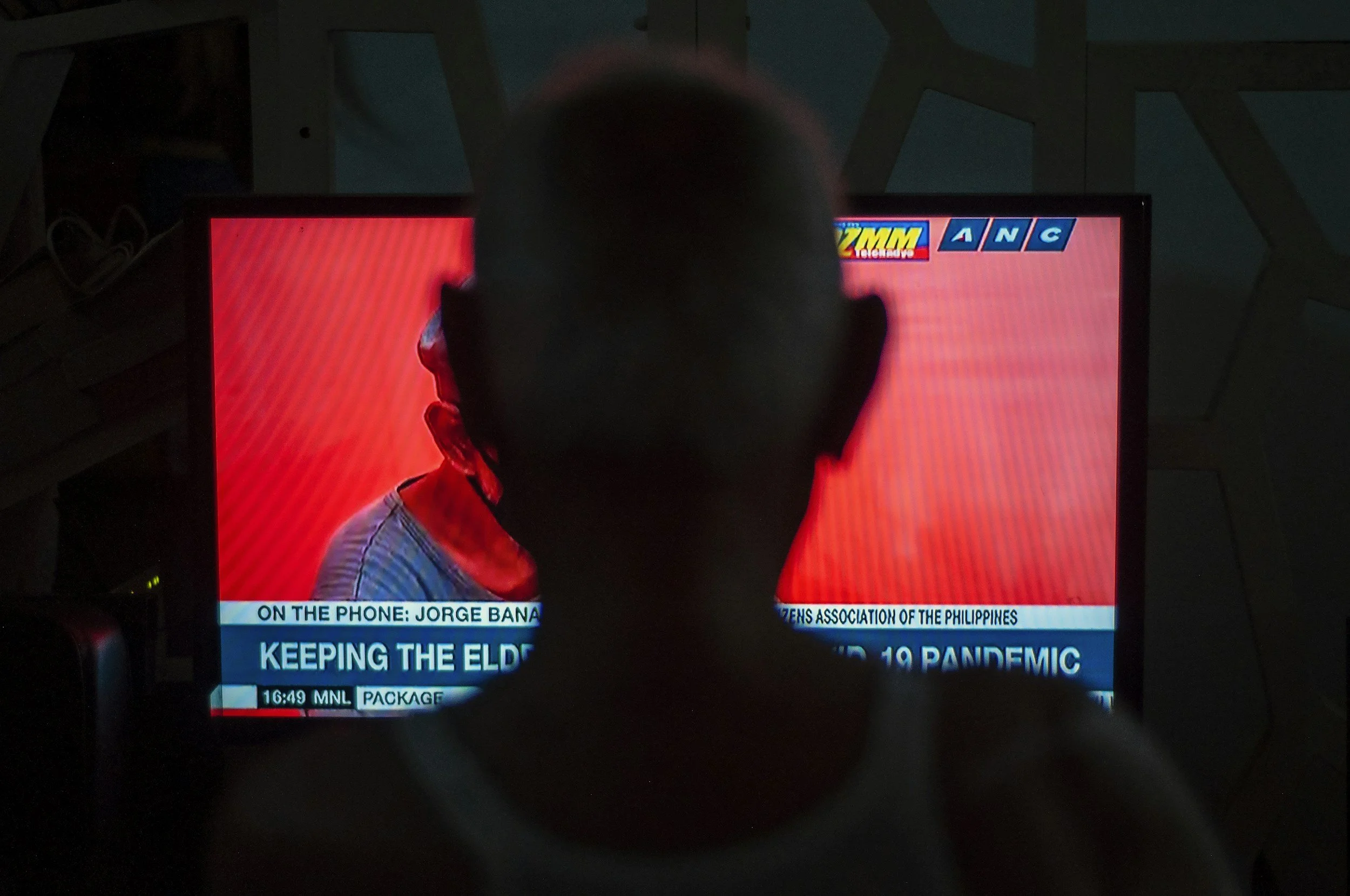
Photo: @amannaavena
You can't be ignorant about everything that's going on in the world; you have to stay informed!
It was practically a mantra growing up.
My parents watched the news religiously. Everyone else they knew watched the news religiously, too. It seemed like a very adult thing to do. Responsible. Engaged. A sign of intelligence, obviously.
But I was thinking about the whole idea of watching the news the other day, and it seems that the boomer blueprint for being a responsible adult was a bit... misguided. But even as the notion loses its grip, it still has a lingering hold on us, culturally speaking.
Case in point: the other day, a friend and I were talking casually when I mentioned something happening in the world, and she apologized for not knowing anything about it. She sheepishly admitted that she hadn't been watching the news for the sake of her own mental health.
"I just can't do it right now," she said.
And that's so valid, there is so much going on in the world that it can feel crushing. So much terror, so much dread, so much violence and injustice and blatant corruption all around us. It can leave you feeling full of impotent rage. The toll that takes on your mental health (and then your physical health!), can feel crippling. I often cycle through my own phases of being informed and then completely out of the loop when I start to feel too depressed to continue. So I get it, but where does the guilt come from? Where the sense that you haven't lived up to your obligations by disconnecting?
Knowing the happenings of the entire planet hasn't really been a requirement of adulthood for the bulk of our history, so where did this feeling come from?
The boomers, obviously.
But that's the easy answer.
Boomers are as much victims of propaganda and systems of control as they are perpetrators of them. But the invisible hands pulling the strings of society used the boomers as their salespeople, so they're blamed by proxy for many of the ills we currently face. Sometimes rightfully so, sometimes piteously so.
But back to the news. When I was a kid, everyone I knew had parents who religiously watched the evening news. It was time that was held sacrosanct. The minute it came on, they would be sat in front of the TV with no exceptions. It didn't matter what we were watching or doing; the remote was promptly surrendered with no objection. Dinner was made and eaten in the living room, in front of the TV, watching the news.
Occasionally, we'd eat it before the news, if it was something quick.
My parents acted as if they had an irrevocable civic duty to watch it. Like watching the news, paying bills, and complaining about the government were what made you a real adult. A daily ritual that offered the illusory comfort of feeling like you were making sense of things by following along.
But the boomer generation grew up during a unique period of history, and a unique period for the news itself.
In the US, there were only three major networks (ABC, CBS, NBC). In Canada, two (CBC and CTV). Because everyone watched the same few news anchors, they enjoyed a shared reality. Some (boomers, obviously) might harken back to this era as being untouched by all the "fake news" that prevails today. But the news wasn't "truer" then; it was just more unified, more monocultural. For decades, the gates of what could be called news by these official gatekeepers were narrow. If it was on the news, it had been vetted by professional editors. So boomers grew up in an era when the cost of entering the broadcast market to reach millions of people was so high that people assumed only "legitimate" entities could do it. That if was on the news, it must be completely true, or it wouldn't be there in the first place.
And media in general was different back then because it was all a one-way street. There were no comment sections, no instant fact-checking, and no independent creators pointing out biases in real time. No infinity of perspectives, all competing for acceptance as the one objective reality.
Skepticism requires alternative viewpoints; if the alternative viewpoints aren't broadcast, skepticism has nowhere to land. Or fewer places anyway, and gains less traction.
All news anchors spoke with a specific authority and cadence. Walter Cronkite’s famous sign-off, "And that's the way it is," perfectly encapsulates the idea that the news wasn't just a report—it was a definitive, objective closing of the day's events.
Add to that the fact that news networks had a vested interest in marketing their broadcasts, which they had to convince people was necessary, so they heavily promoted the idea that watching was a civic responsibility. To be a "good citizen" or a "responsible adult," you had to be "in the know." This turned a media product into a badge of intellectual morality. A way of virtue signalling your good character.

Photo: @codzilla_swiss
Before television, the idea of a "neutral" news source was actually less common. In the 18th and 19th centuries, newspapers were often explicitly partisan. Many were funded by political parties, so readers knew exactly what flavour of news they were getting. People were generally aware that papers had agendas. However, because there were often multiple local papers in a single city, they had to triangulate the truth, which naturally required a bit more active engagement than the passive TV watching that followed.
With the advent of television, 20th-century news sold neutrality as a product. It was their whole brand, making skepticism feel like a fringe activity rather than a necessity. If you didn't agree with what the news was saying, you'd likely get labelled a conspiracy theorist.
The blind faith in supposedly unbiased reporting meant that "being informed" was really just code for "being a good repeater of the sanctioned narrative."
In Canada, this basically would have meant agreeing with the CBC. With limited sources of news and no expectation that you should doubt them or cross-reference what they were saying, staying informed by watching the news became a sort of shortcut to feeling superior without doing any of the work of actually trying to be informed by considering different perspectives. There wouldn't have been many available sources from which you could cross-reference things anyway. If the CBC told you that XYZ was taking place in the Middle East, you just had to trust that they were right. Now, we can hear directly from people in the places the news is reporting on and quickly uncover whether what they're saying is happening the way they say it's happening, or is just some manufactured version of events.
The disillusion people feel with the news is largely a result of the immediate sharing of information that happens on social media, but even that is under attack. The news has always been a business, complete with its own corporate biases. Objectivity was a 20th-century marketing tool used by networks to sell ads to everyone. By pretending they didn't have a bias, they made themselves the standard for what was "real" and "true" and "trustworthy."
It must have been fun while it lasted. Now... we have algorithms to contend with.
But could the same thing happen on social platforms?
When a handful of "predatory elites" control the algorithm, the "truth" is whatever the robot behind the curtain decides keeps you engaged, compliant or divided.
In 2026, the consolidation of media, with Larry Ellison’s Oracle-led consortium controlling the US TikTok algorithm and billionaires like Musk (X), Bezos (Washington Post), and the Skydance/Paramount deals, has made official media accounts even more suspect than they were before, but what about individual creators? Just doomed to be shadow-banned?
A lot of people my age don't watch the news. No one I know does. They'll hop online to watch a clip of something specific they want to know more about, get the gist of it, and then take it away to do their own search. News videos, articles, social media, or Reddit. Lived reality is more trusted, and that's what social media allows us to see, like first-hand accounts, raw footage, and personal stories that skip the editorial filters of a newsroom. So we've moved from believing the "official" version of events to triangulating the truth through the shared experiences of people on the ground like generations before.
But this isn't just cynicism and unfounded disrespect for established institutions that we should revere as our parents did but don't; it's actually a more advanced form of critical thinking—a necessary response to a low-trust environment.
Looking for "objective truth" in today's 24-hour news cycle is like trying to find a solid object in a hall of mirrors. Every news outlet has a business model, a target demographic, and a cultural lens. There's simply no going back to thinking of the news as a holy source of truth.
The goal today isn't to find a perfectly objective source, because that doesn't, and can't, exist in the first place. The goal is to try to reach some semblance of a consensus on meaning by looking at a multitude of clearly biased sources. It requires a deeper sense of intellectual humility than the moral superiority of "knowing the facts" and an understanding that motives do a better job of pointing you towards the truth, even if it is ultimately unknowable. I think that's a good thing. Exhausting, sure. But ultimately good.
Sharing different perspectives and lived realities helps bridge the gaps that the "official narratives" leave behind. Today, being a "responsible adult" requires emotional regulation, lateral reading, and humility. We are inundated with news from around the world on an absolutely unprecedented level, much of it contradictory. Responsibility in this landscape means not reacting to every "breaking news" alert on a personal level. We can't treat everything as world-ending, even when the news tells us it is. We can't take it as an attack on our personal positions and need to have empathy for the other side of the story, because there always is one. We can't accept a unified, singular view of events presented by newscasts of old. We have to eye the news with suspicion as it seeks to program us with propaganda that serves people who profit from our division.
It's no longer a passive activity because we need to be discerning enough to know why they're telling you the story they're telling you in the first place. What do they want you to take away from it? Why? Who benefits if you adopt this perspective? Some company somewhere benefits from nearly every type of chaos you can imagine. And we need to embrace humility and the reality that we can never truly know all the factors at play in most international news stories. To embrace the fact that our favourite source might be wrong, biased, or outright lying for the benefit of one of their affiliates, or vampiric owners from the parasite class.
And it's time for boomers to let go of the idea that they were/are "smarter" for watching the news than the younger generations, who don't; because now we know that they were just more unified in their misinformation, that's all.